
Blog
Spine Disorders Explained: Why Posture Is the Root Cause of Most Pain

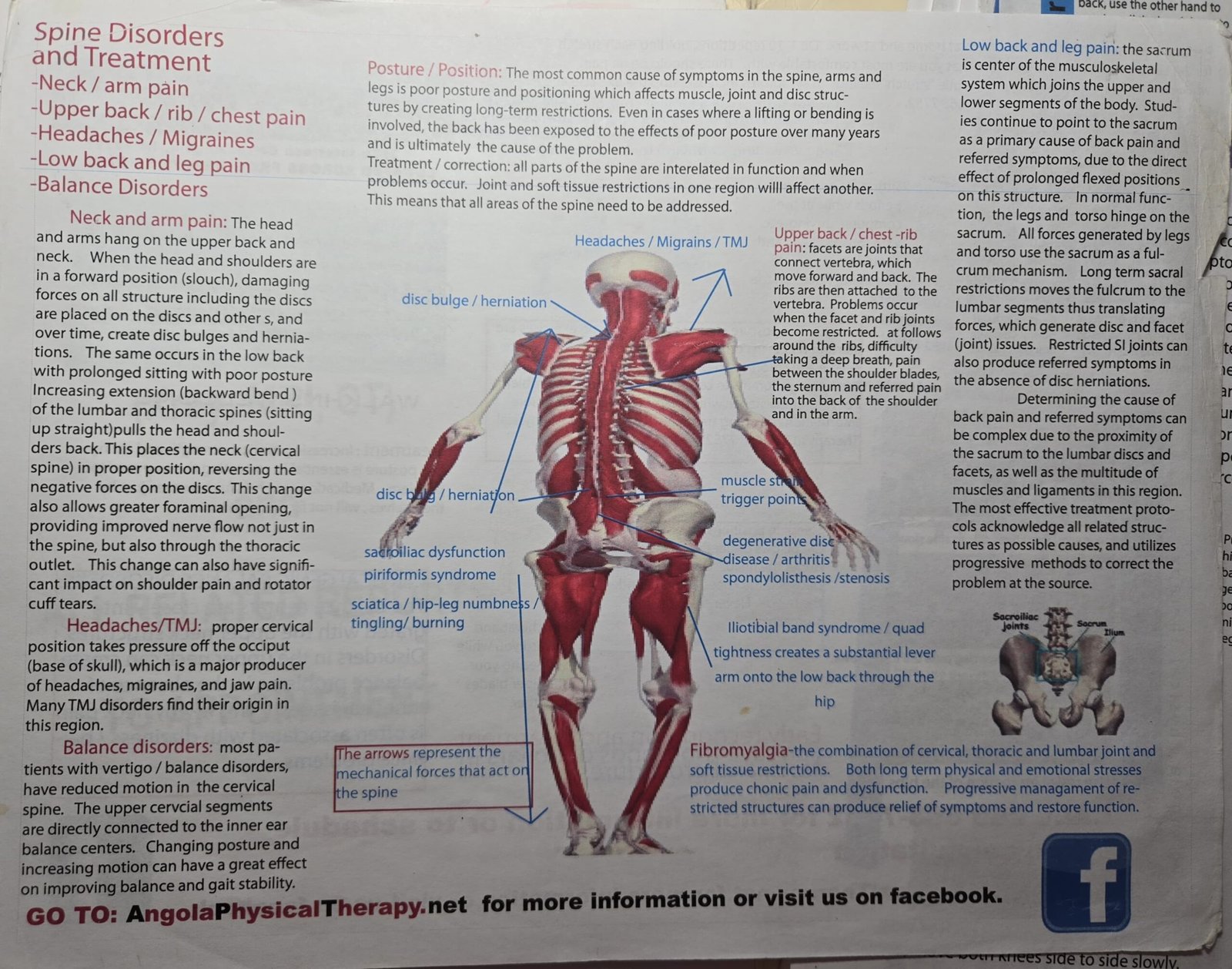
Most people assume their back pain, neck stiffness, or chronic headaches are isolated problems with isolated causes. In reality, the spine is one interconnected system — and when posture fails in one region, every other region pays the price. Understanding how spine disorders develop, and more importantly why they develop, is the first step toward real and lasting recovery.Posture and Position: The Primary Driver of Spinal PainThe most common cause of symptoms in the spine, arms, and legs is poor posture and positioning. Over years of sitting, slouching, and moving with restricted mechanics, the muscles, joints, and discs of the spine are exposed to damaging forces that gradually create long-term restrictions. Even in cases where a sudden lifting or bending incident seems to be the cause, the back had already been exposed to the effects of poor posture over many years — the incident was simply the final trigger.This is why treatment and correction must address all parts of the spine together. Joint and soft tissue restrictions in one region will always affect another. No spinal disorder exists in isolation.Neck and Arm PainThe head and arms hang on the upper back and neck. When the head and shoulders move into a forward position — the classic slouch — damaging forces are placed on all structures including the discs. Over time, this creates disc bulges and herniations. The same occurs in the lower back with prolonged sitting and poor posture. Increasing spinal extension — sitting and standing tall — pulls the head and shoulders back into proper position, reversing the negative forces on the discs. This also allows greater foraminal opening, improving nerve flow not just in the spine but through the thoracic outlet — which can have a significant impact on shoulder pain and rotator cuff tears.Headaches and TMJProper cervical position takes pressure off the occiput — the base of the skull — which is a major producer of headaches, migraines, and jaw pain. Many TMJ disorders find their origin in the neck and upper cervical spine. When the head is carried forward, the muscles and joints at the base of the skull are under constant compression, generating referred pain into the head and face. Correcting cervical posture is often the most overlooked and most effective treatment for chronic headaches.Upper Back, Chest, and Rib PainThe facet joints of the thoracic spine connect each vertebra and allow the spine to move forward and back. The ribs attach directly to these vertebrae. When the facet and rib joints become restricted — through poor posture, repetitive movement, or injury — the result is pain between the shoulder blades, difficulty taking a deep breath, pain around the ribs, and referred pain into the back of the shoulder and down the arm. Many cases of what appears to be rotator cuff pain or chest tightness actually originate in restricted thoracic facet and rib joints.Low Back and Leg PainThe sacrum sits at the center of the musculoskeletal system, joining the upper and lower segments of the body. Research continues to point to the sacrum as a primary cause of back pain and referred symptoms — due to the direct effect of prolonged flexed positions on this structure. In normal function, the legs and torso hinge on the sacrum, and all forces generated by the legs and torso use it as a fulcrum mechanism. Long-term sacral restrictions shift the fulcrum to the lumbar segments, generating disc and facet issues throughout the lower back. Restricted sacroiliac joints can also produce referred symptoms even in the absence of disc herniations.Determining the exact cause of low back pain and referred symptoms can be complex because of the proximity of the sacrum to the lumbar discs and facets, and the many muscles and ligaments in this region. The most effective treatment protocols acknowledge all related structures as possible causes and use progressive methods to correct the problem at the source.Sacroiliac Dysfunction and Piriformis SyndromeThe sacroiliac joint is one of the most commonly overlooked sources of low back and buttock pain. When the SI joint becomes restricted or dysfunctional, it creates deep aching pain that is easily confused with disc herniation. Piriformis syndrome — where the deep buttock muscle compresses the sciatic nerve — often develops alongside SI dysfunction, creating the burning, tingling, and numbness in the leg known as sciatica.Iliotibial Band Syndrome and Quad TightnessA tight ITB and quad create a substantial mechanical lever arm that acts directly on the low back through the hip. This is one of the most commonly missed contributors to chronic lower back pain. The thigh muscles generate enormous forces that travel upward through the hip and into the lumbar spine with every step — and when they are restricted, those forces are concentrated in the joints and discs of the lower back rather than being distributed evenly.Balance DisordersMost patients with vertigo and balance disorders have reduced motion in the cervical spine. The upper cervical segments are directly connected to the inner ear balance centers. When motion is restricted in the upper neck, the sensory signals to the balance system are disrupted — producing dizziness, vertigo, and gait instability. Changing posture and increasing cervical motion can have a significant positive effect on balance and gait stability.FibromyalgiaFibromyalgia represents the combination of cervical, thoracic, and lumbar joint and soft tissue restrictions alongside long-term physical and emotional stress. Both factors together produce chronic pain and widespread dysfunction. Progressive management of restricted structures — mobilizing the joints and soft tissue that have been compressed and tightened over years — can produce meaningful relief of symptoms and restore function over time.The Bottom LineEvery disorder described above shares a common thread — mechanical restriction of joints and soft tissue that prevents the spine from moving, absorbing force, and functioning the way it was designed to. Posture is not just about appearance. It is the foundation of spinal health, nerve function, and pain-free movement.REGENV was designed specifically to address these mechanical restrictions — mobilizing the connective tissue and joint structures that drive the majority of spinal disorders, restoring proper movement, and reducing the forces that create pain and dysfunction at their source.